WCRC Leaders · Spirituality · India's Greatest 27 Mystics and Spiritual Gurus
Inside India's Greatest Mystics: What 27 Spiritual Masters Teach Today's Leaders
Twenty-seven teachers, four eras and one question for every CEO and founder: what would change in your company if you led the way these people lived? WCRC answers it with twenty-seven leadership models.
By Abhimanyu Ghosh for WCRC Leaders · Powered by Gurushakti
27
Teachers
27
WCRC models
4
Eras
WCRC Consulting · Strategy into execution
Implement these strategies inside your organisation
Deep analysis of where your organisation stands and a strategic implementation of the WCRC models, built for your leadership team, culture and business.
Models created exclusively by Abhimanyu Ghosh; proprietary to Abhimanyu Ghosh and WCRC. WCRC's consulting service is not connected with, or endorsed by, any teacher, tradition or organisation discussed here.
Why a leadership house is reading the mystics
Most boardroom conversations today have the same guest at the table. It is not a person. It is the question of what AI will do to the company, to the people in it, and to the person running it. The answers on offer are mostly technical: which model, which vendor, which use case. Those answers matter. They are also the easy part.
The hard part is human. Stanford's AI Index 2026 says 88% of surveyed organisations were using AI by 2025. Microsoft's 2026 Work Trend Index found that only 26% of AI users say their leadership is clearly and consistently aligned on it, and that organisational factors such as culture, manager support and talent practices account for more than twice the reported impact of individual ones. The technology has arrived. The leadership has not caught up.
So WCRC went looking for leadership thinking that has already survived several upheavals. India has a long line of teachers who built institutions without capital, held communities together through conquest and famine, and changed how millions of people behave, often with nothing more than a song, a kitchen and a clear idea of what mattered. Their teaching was never written for managers. A great deal of it reads as if it had been.
What this series is, and what it is not
India's Greatest 27 Mystics and Spiritual Gurus brings together twenty-seven teachers linked with the Hindu tradition, from Adi Shankaracharya in the eighth century to Neem Karoli Baba and Guruji of Chhattarpur in the twentieth. They are grouped in four eras. This is a selection, not a ranking, and it does not cover other faiths. The life-and-teachings research behind it comes from our partner platform Gurushakti, which published the original series.
What WCRC adds is the leadership reading. For each teacher we have built a named WCRC model: a structure a CEO, founder or leadership team can use on Monday morning. Shankaracharya's rope and snake becomes a discipline for separating fact from projection before a big decision. Basavanna's insistence that all honest work has dignity becomes an operating loop for workforce strategy in an automated economy. Neem Karoli Baba's love, serve, remember becomes a serve-first model that holds up when the routine work goes to machines.
How every model is built
Each of the twenty-seven models maps to the seven parameters WCRC already uses to assess leaders: Vision Quotient, Impact Index, Innovation Score, People Leadership, Stakeholder Trust, Resilience Factor and Global Mindset. That keeps the twenty-seven models in one system. A leadership team short on trust can go straight to the models that weight Stakeholder Trust most heavily. A founder preparing for a hard year can start with Resilience.
- The teaching, grounded only in documented sources and one true moment from the teacher's life.
- The WCRC model itself, with a diagram and its building blocks, each paired with a practice.
- An operating model that shows how a company runs it: inputs, practices, outputs and outcomes.
- A benefit model that sets out what the leader, employees, customers, investors and society each gain.
- Why it matters in the AI age, a step-by-step implementation playbook for the CEO and the company, leading indicators to track, and the ways the model goes wrong.
We have set ourselves two rules. We do not invent quotes, and we do not invent business cases or statistics. Where we quote a modern translation or an organisation's own text, we keep the quote brief and credit the translator or publisher. Where we cite research, it is published and checkable. Where we speak to leaders, we speak to them directly rather than dressing up an imagined CEO.
Why now
The World Economic Forum's Future of Jobs Report 2025 expects workers to see 39% of their existing skill sets transformed or made outdated between 2025 and 2030. Gallup's 2026 State of the Global Workplace report puts global employee engagement at 20%, down from 23% in 2022, and manager engagement at 22%. Edelman's 2026 Trust Barometer found that seventy percent of people are unwilling or hesitant to trust someone with different values, facts, problem-solving approaches or cultural background.
Read those three findings together and they describe a leadership problem more than a technology problem: people being asked to change faster than ever, with less energy for it, and less trust in each other. That is the ground these teachers worked on. Sant Tukaram kept faith when his life's work was thrown into a river. Sarada Maa made strangers, and even robbers, feel they belonged. Srila Prabhupada started a global institution at sixty-nine with a crate of books. None of them had a playbook for AI. All of them had a playbook for change.
The question for a CEO is no longer whether the company will use AI. It is what kind of person will be leading it when it does.
The WCRC Guru Leadership Codex
Twenty-seven models, one framework. Every model is weighted against the seven parameters WCRC uses to assess leaders.
Fig. 1The Codex map: twenty-seven models across WCRC's seven parameters
© Abhimanyu Ghosh & WCRC
| Guru · WCRC model | Vision | Impact | Innovation | People | Trust | Resilience | Global |
|---|---|---|---|---|---|---|---|
| Adi ShankaracharyaSeeClear Model | 5 | 3 | 5 | 2 | 4 | 3 | 2 |
| RamanujacharyaOpen Gopuram Model | 3 | 4 | 3 | 5 | 5 | 2 | 3 |
| Guru GorakhnathSteady-Mind Discipline Model | 2 | 2 | 2 | 5 | 3 | 5 | 1 |
| BasavannaKayaka–Dasoha Value Loop | 3 | 5 | 2 | 5 | 4 | 3 | 2 |
| Sant JnaneshwarPasayadan Translation Model | 4 | 3 | 2 | 4 | 5 | 2 | 5 |
| Sant KabirTruthMirror Model | 3 | 3 | 5 | 4 | 5 | 3 | 2 |
| Sant SurdasStoryLight Model | 5 | 3 | 2 | 5 | 4 | 3 | 2 |
| Chaitanya MahaprabhuChorus Movement Model | 3 | 5 | 2 | 5 | 4 | 3 | 3 |
| MirabaiSingle-Refuge Focus Model | 5 | 3 | 2 | 3 | 4 | 5 | 1 |
| Goswami TulsidasPurposeTurn Model | 5 | 5 | 4 | 3 | 3 | 3 | 2 |
| Sant TukaramIndrayani Resilience Model | 2 | 3 | 2 | 4 | 5 | 5 | 1 |
| Baba LoknathFortress Model of Crisis Leadership | 2 | 3 | 1 | 5 | 4 | 5 | 2 |
| Trailanga SwamiSilent Authority Model | 2 | 3 | 1 | 5 | 5 | 4 | 2 |
| Lahiri MahasayaBanat-Banat Compounding Model | 2 | 3 | 5 | 4 | 2 | 5 | 3 |
| Sri Ramakrishna ParamahamsaMany-Paths Model | 3 | 2 | 4 | 5 | 4 | 2 | 5 |
| Sri Sarada DeviMake-It-Your-Own Belonging Model | 2 | 3 | 3 | 5 | 5 | 4 | 3 |
| Sai Baba of ShirdiFaith–Patience Matrix | 5 | 3 | 2 | 3 | 4 | 5 | 3 |
| Swami VivekanandaFour-Yoga Leader Model | 4 | 4 | 3 | 5 | 3 | 3 | 5 |
| Sri AurobindoIntegral Transformation Model | 5 | 3 | 5 | 3 | 2 | 4 | 3 |
| Ramana MaharshiWho-Am-I Root Enquiry | 5 | 2 | 2 | 3 | 4 | 5 | 1 |
| Swami SivanandaSix-Step Service Ladder | 2 | 5 | 1 | 5 | 4 | 3 | 2 |
| Paramahansa YoganandaEssence–Form Bridge | 3 | 5 | 4 | 3 | 4 | 2 | 5 |
| Srila PrabhupadaJaladuta Founder Model | 4 | 4 | 3 | 3 | 2 | 5 | 5 |
| Anandamayi MaSelf-Initiation Model | 3 | 2 | 5 | 5 | 4 | 3 | 3 |
| Nisargadatta MaharajHear–Reflect–Embed Conviction Model | 5 | 2 | 3 | 2 | 4 | 5 | 1 |
| Neem Karoli BabaServeHeart Model | 2 | 4 | 1 | 5 | 5 | 3 | 3 |
| Guruji of ChhattarpurGratitude Ledger Model | 1 | 3 | 1 | 5 | 5 | 4 | 3 |
8th–12th century
The Classical Acharyas
Teachers who set down great schools of thought and practice: Advaita and Vishishtadvaita, the Nath yoga of the body, and the vachana poet of Karnataka who made daily work a form of worship.
 01
01Adi Shankaracharya
The WCRC SeeClear Model™
See the rope before you fight the snake.
 02
02Ramanujacharya
The WCRC Open Gopuram Model™
Open the tower: share what you know with all.
 03
03Guru Gorakhnath
The WCRC Steady-Mind Discipline Model™
Laugh, play, and keep the mind steady.
 04
04Basavanna
The WCRC Kayaka–Dasoha Value Loop™
Honour every role, share what is earned, open the hall.
13th–17th century
The Bhakti Saints
Poet-saints who took God out of Sanskrit and into the languages people spoke at home: Marathi, Braj, Awadhi, Bengali and Rajasthani. Their songs are still sung in temples, homes and on pilgrim roads.
 05
05Sant Jnaneshwar
The WCRC Pasayadan Translation Model™
Translate the highest idea into the language of the front line.
 06
06Sant Kabir
The WCRC TruthMirror Model™
Hold every ritual to the mirror: substance or show?
 07
07Sant Surdas
The WCRC StoryLight Model™
See it inwardly, then tell it as a human story.
 08
08Chaitanya Mahaprabhu
The WCRC Chorus Movement Model™
Lead from below and let everyone join the song.
 09
09Mirabai
The WCRC Single-Refuge Focus Model™
One refuge, held with courage and without hatred.
 10
10Goswami Tulsidas
The WCRC PurposeTurn Model™
Redirect your strongest passion into lasting service to others.
 11
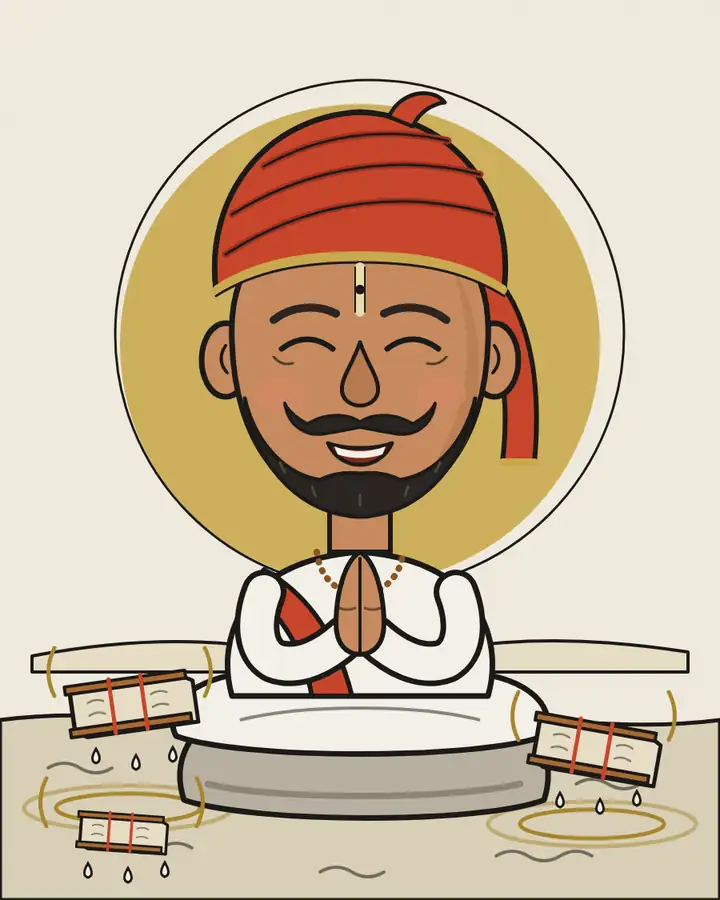
11Sant Tukaram
The WCRC Indrayani Resilience Model™
When your work is sunk, hold steady and let it resurface.
19th century
The Renaissance Masters
In a century of colonial rule, these masters renewed the old paths from within: a wandering yogi of Bengal, a silent yogi on the Varanasi ghats, a householder teacher of Kriya Yoga, the priest of Dakshineswar and the Holy Mother, the fakir of Shirdi, and the monk who carried Vedanta to the West.
 12
12Baba Loknath
The WCRC Fortress Model of Crisis Leadership™
Secure the base, master anger, and make help easy to call.
 13
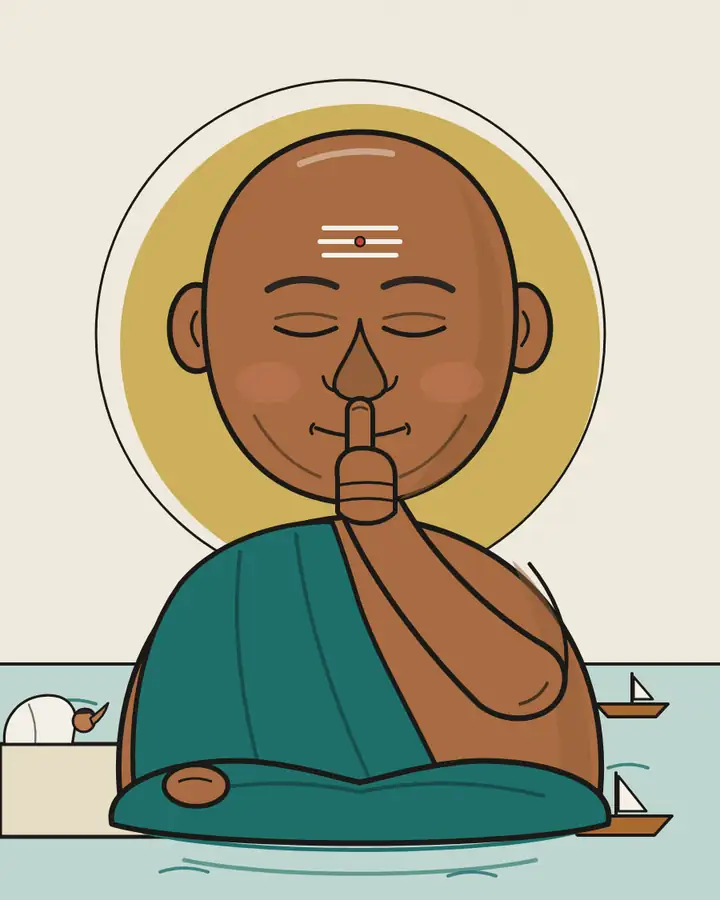
13Trailanga Swami
The WCRC Silent Authority Model™
Let your example speak first; honour merit wherever it sits.
 14
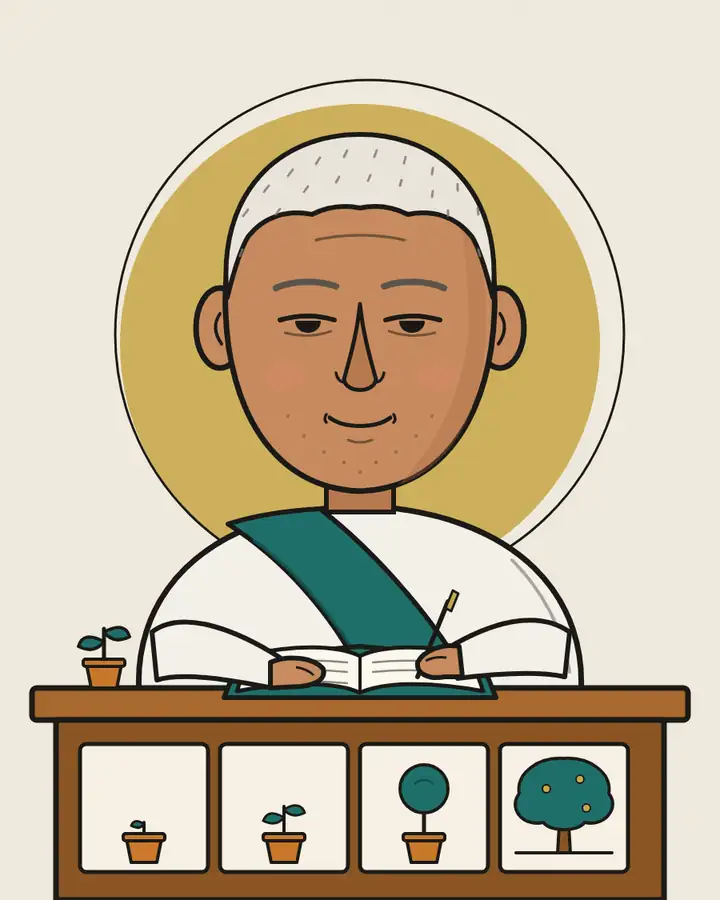
14Lahiri Mahasaya
The WCRC Banat-Banat Compounding Model™
A little practice every day, for years, builds mastery.
 15
15Sri Ramakrishna Paramahamsa
The WCRC Many-Paths Model™
One clear summit; respect every path; walk another yourself.
 16
16Sri Sarada Devi
The WCRC Make-It-Your-Own Belonging Model™
Check your own faults first; make no one a stranger.
 17
17Sai Baba of Shirdi
The WCRC Faith–Patience Matrix™
Hold conviction and patience together; either alone fails.
 18
18Swami Vivekananda
The WCRC Four-Yoga Leader Model™
Every person is potentially great; build all four capacities.
20th century
The Modern Sages
Teachers of a changing India and a wider world: self-enquiry at Arunachala, yoga from Rishikesh, Kriya Yoga in America, Krishna bhakti carried across the ocean, and quiet grace in the Kumaon hills and at Chhattarpur.
 19
19Sri Aurobindo
The WCRC Integral Transformation Model™
Change how the institution sees, then everything it does changes.
 20
20Ramana Maharshi
The WCRC Who-Am-I Root Enquiry™
Trace each decision to the one who wants it.
 21
21Swami Sivananda
The WCRC Six-Step Service Ladder™
Start with service; reflection and clarity follow from practice.
 22
22Paramahansa Yogananda
The WCRC Essence–Form Bridge™
Hold the essence constant; adapt the form for each audience.
 23
23Srila Prabhupada
The WCRC Jaladuta Founder Model™
Accept the mandate, make the voyage, then build to last.
 24
24Anandamayi Ma
The WCRC Self-Initiation Model™
Know yourself first; influence follows without any title.
 25
25Nisargadatta Maharaj
The WCRC Hear–Reflect–Embed Conviction Model™
Hear it, think it through, practise it, then decide.
 26
26Neem Karoli Baba
The WCRC ServeHeart Model™
Serve first, lead quietly.
 27
27Guruji of Chhattarpur
The WCRC Gratitude Ledger Model™
Gratitude at the centre keeps the five thieves out.
Powerfacts
- What is India's Greatest 27 Mystics and Spiritual Gurus?
- It is a WCRC Leaders series by Abhimanyu Ghosh, powered by Gurushakti, that reads twenty-seven Indian mystics and gurus linked with the Hindu tradition as leadership teachers. Each teacher has a dedicated chapter and a WCRC leadership model for CEOs, founders and corporate leaders.
- What is the WCRC Guru Leadership Codex?
- The Codex is the set of twenty-seven WCRC-created leadership models, one per teacher, each mapped to WCRC's seven leadership parameters. Every model comes with a diagram, an operating model, a benefit model, an implementation playbook and indicators to track.
- Is this a ranking of gurus?
- No. The twenty-seven are a selection arranged in four eras, from the Classical Acharyas to the Modern Sages. The order is chronological, not a judgement of importance, and the series does not cover teachers of other faiths.
The life-and-teachings series is published by Gurushakti at gurushakti.in/gurus.
© 2026 Abhimanyu Ghosh and WCRC. The WCRC Guru Leadership Codex and the twenty-seven WCRC models, with their names, diagrams, business models, benefit models and implementation playbooks, were created exclusively by Abhimanyu Ghosh and are proprietary models of Abhimanyu Ghosh and WCRC. They may not be reproduced, adapted or used commercially without written permission.