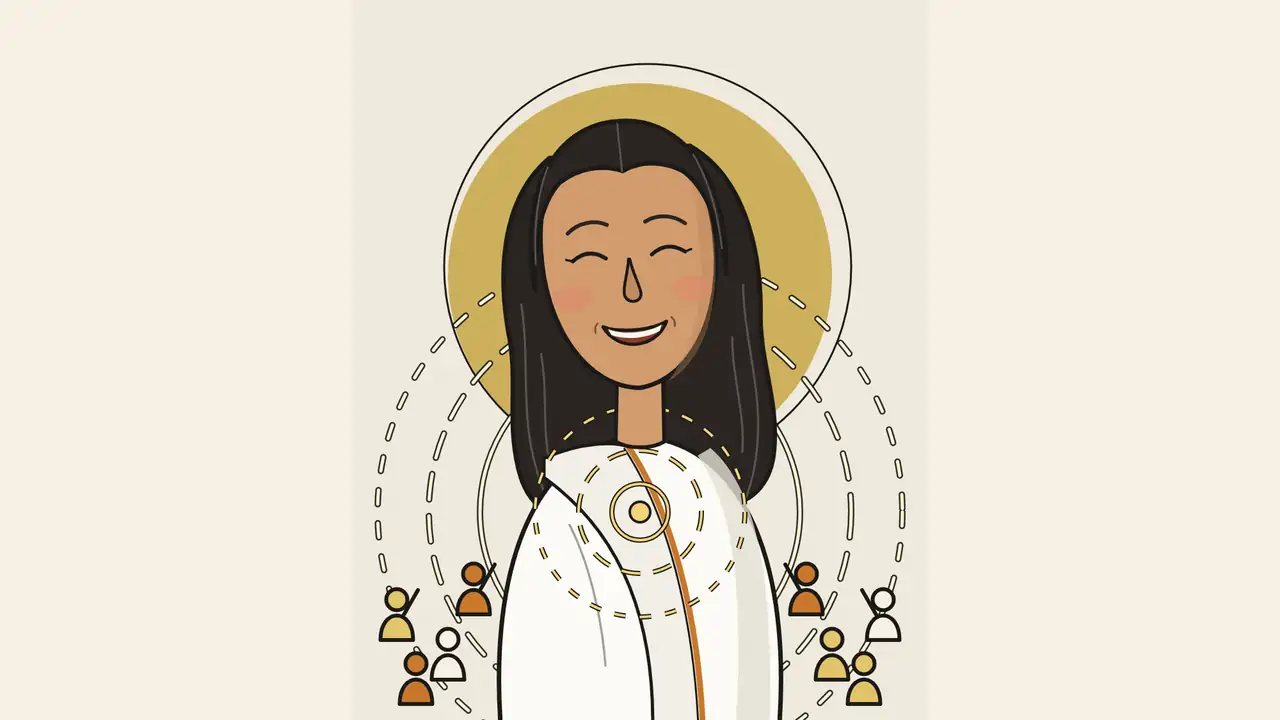
Original illustration drawn for WCRC. © Abhimanyu Ghosh & WCRC.
Spirituality · The Modern Sages · No. 24 of 27
Anandamayi Ma initiated herself, held no title and led anyway
A village girl from East Bengal performed her own initiation in 1922 and drew people of every faith without ever asking for authority. WCRC's Self-Initiation Model reads her life as a case for influence that grows outward from self-knowledge.
WCRC Consulting · Strategy into execution
Implement these strategies inside your organisation
Deep analysis of where your organisation stands and a strategic implementation of The WCRC Self-Initiation Model, built for your leadership team, culture and business.
Models created exclusively by Abhimanyu Ghosh; proprietary to Abhimanyu Ghosh and WCRC. WCRC's consulting service is not connected with, or endorsed by, any teacher, tradition or organisation discussed here.
Dates
1896 – 1982
Region
Kankhal, Haridwar, Uttarakhand
Tradition
Women Saints
WCRC model
WCRC-GLC-24
The model in one line
Know yourself first; influence follows without any title.
The WCRC Self-Initiation Model™ · anchored in Know yourself, and that is knowing God
Nirmala Sundari of Kheora
Anandamayi Ma was born Nirmala Sundari on 30 April 1896 at Kheora, a village in East Bengal that now lies in the Brahmanbaria district of Bangladesh. Her parents were Bipin Bihari Bhattacharya and Mokshada Sundari Devi; her mother later took sannyasa herself.
On 7 February 1909, aged about 13, she was married to Ramani Mohan Chakravarti, later known as Bholanath. Through the 1910s and into the 1920s the couple lived at Sripur, Atpara, Bajitpur and other places, and through those years she went through long periods of spontaneous spiritual practice. On 3 August 1922, at Bajitpur, she performed her own initiation, with no outer guru.
In 1924 she moved to Shahbag in Dhaka and devotees began to gather. Around 1925 her devotee Bhaiji, Jyotish Chandra Roy, gave her the name Anandamayi, the Mother permeated with joy. Her first ashram followed at Siddheswari between 1926 and 1929, then the Ramna ashram in Dhaka.
From the 1930s she lived in north India and travelled almost constantly. Ashrams grew at Varanasi, Dehradun, Kankhal and elsewhere, and in 1950 the Shree Shree Anandamayee Sangha was formally established; it now runs some 26 ashrams. Among those close to her were Bhaiji, Bholanath, Gurupriya Didi and the French-born Swami Vijayananda.
She wrote nothing. Her words survive because devotees recorded them, most notably in the volumes of Matri Vani. She left the body on 27 August 1982 at the Kishanpur ashram in Dehradun, and her samadhi shrine is at the Kankhal ashram in Haridwar, which is also the Sangha's headquarters.
One search with two names
The sentence that sums up Anandamayi Ma's teaching is short enough to memorise and difficult to live.
Know yourself, and that is knowing God.
Anandamayi Ma, English translation as published by Shree Shree Anandamayee Sangha (Ma's Life)
In her teaching, self-knowledge and knowledge of God are the same search under two names. The goal of life is to realise one's true nature, which is one with God. Behind every name and form, she taught, there is only the One, and seeing separation is the root of suffering.
From that centre came an unusual openness. She welcomed people of every faith and practice and did not ask anyone to change religion. If behind every form there is one reality, then many paths can lead to it, and arguing over which is best misses the point.
Her teaching was also practical about time. According to the Matri Vani collections, she asked people to keep God's name and presence in mind through the day, in work and rest alike, and spoke of divine love as the real wealth, with which nothing is lacking. The inward search was meant to continue in the kitchen and the office, alongside everything else.
Jhulan Purnima at Bajitpur, 1922
The defining moment of Anandamayi Ma's life is one in which nobody gave her anything. On Jhulan Purnima, 3 August 1922, at Bajitpur, Nirmala Sundari performed her own initiation. Devotees recount that she later said God Himself, in the role of guru, revealed the name to her.
In a tradition where initiation normally passes from teacher to student, that is a striking fact. She had no human guru and never claimed one. She held no office and no title. What she had was an inner clarity that did not wait for permission.
The influence that followed moved in an unexpected direction. Devotees recount that her husband Bholanath, after years of watching her sadhana, received initiation from her and became her first disciple. Influence travelled sideways and upward, from a young wife to her husband, years before any ashram or institution existed.
The naming came later, from someone else. Devotees recount that near Dhaka she located a forgotten Kali shrine at Siddheswari, and that it was there Bhaiji first called her Anandamayi. The title arrived after the influence had already begun to spread.
Leaders who believe authority must come first and influence second have the order reversed, at least in her case.
Learning that no calendar can schedule
Self-initiation is a strange idea in a corporation, where learning usually arrives on a calendar invitation. It is becoming a necessary one. The World Economic Forum's Future of Jobs Report 2025 says workers can expect two-fifths (39%) of their existing skill sets to be transformed or become outdated over 2025–2030. No training department can schedule change at that rate. People will have to start their own learning, without waiting for a programme or a mentor, much as Nirmala Sundari did not wait for a guru.
Psychology supports the inward starting point. Ryan and Deci's self-determination theory names three innate needs, competence, autonomy and relatedness, which when satisfied produce stronger self-motivation and well-being, and when thwarted weaken both. A workplace that asks people to self-initiate has to give them the autonomy to do it, or the request turns into one more instruction from above.
Her openness to many paths has a modern parallel too. In a computational model published in 2004, Hong and Page showed that under certain conditions a group of diverse problem solvers outperforms a group of the best individual performers, partly because the best performers tend to think alike. The finding comes from a computational model under stated conditions, but it gives a hard-headed reason to welcome approaches that differ from one's own.
AI raises the stakes on all three. When tools can supply answers on demand, what distinguishes people is whether they know what they are for, whether they start learning without being told, and whether they can work with colleagues who reach the same goal another way. That is a fair summary of how Anandamayi Ma lived.
The WCRC Self-Initiation Model
Created by Abhimanyu Ghosh · A proprietary model of Abhimanyu Ghosh and WCRC
WCRC calls this the WCRC Self-Initiation Model. It is WCRC's own reading of Anandamayi Ma's life for leaders and is not associated with Shree Shree Anandamayee Sangha. The model describes leadership that begins with self-knowledge and self-directed growth and widens into influence without formal authority, in five rings: know yourself, self-initiate, remember the purpose in every task, lead without title, and welcome all paths. The concentric diagram shows how influence spreads outward from the centre, and the operating model and playbook that follow show how a company puts it to work.
A model of leadership that starts from self-knowledge and self-directed growth, and widens into influence without formal authority. The leader initiates their own learning, keeps purpose in every task, earns influence sideways and upward, and welcomes many paths to the same goal.
Fig. 1The WCRC Self-Initiation Model™
© Abhimanyu Ghosh & WCRC
The building blocks
01Know yourself
Clear self-knowledge of values, motives and limits is the centre from which every other kind of influence grows.
In practiceThe leader spends a few minutes each day asking who they are beneath their role and mood.
02Self-initiate
Growth does not wait for a programme, a mentor or permission; the leader starts their own learning.
In practiceThe leader sets one self-chosen learning goal each quarter and begins it without waiting for approval.
03Remember the purpose in every task
Keeping the larger purpose in mind during ordinary work gives small tasks meaning and steadiness.
In practiceThe leader opens each meeting by stating which purpose the meeting serves.
04Lead without title
Influence earned by clarity and example flows sideways to peers and upward to seniors, as it did with her husband.
In practiceThe leader looks for ways to help peers and seniors succeed without claiming authority over them.
05Welcome all paths
Different people reach the same goal by different routes; a leader who insists on one way loses many good people.
In practiceThe leader asks teams for alternative approaches before fixing a method.
Authority earned sideways and upward
A CEO has the most formal authority in the building, which makes the model's centre harder for a CEO to reach. Title answers so many questions that the question of who one is beneath the role rarely gets asked. The model asks it daily.
Self-knowledge has a practical edge at the top. A chief executive who knows their own motives and limits makes fewer decisions out of mood, and notices sooner when a strategy is really a preference. Owens and Hekman's study of humble leaders, based on 55 in-depth interviews, found three core behaviours: acknowledging personal limits and mistakes, spotlighting followers' strengths, and modelling teachability. They describe leader humility as showing followers how to grow.
Leading without title applies to a CEO too, in two directions. Sideways, it means helping peers in other companies, industry bodies or partner firms succeed without claiming authority over them. Upward, it means influencing a board through clarity and example in place of position. Bholanath's initiation is an extreme case of upward influence, and a reminder that it rests on years of visible consistency.
The blind spots are real, and the model's failure modes name them. Leading without title can slide into undermining formal authority, or into influence no one is accountable for. Self-initiation can become going it alone. Welcoming all paths can turn into having no standards, so that every approach is accepted and nothing is decided. A CEO who adopts the model has to welcome alternatives and then decide firmly.
Founders without a manual
Founders are self-initiated by definition. Nobody appointed them, and no programme taught them how. In that sense they begin where Anandamayi Ma began, with nothing but their own clarity, and the model's centre is familiar ground.
The difficulty comes in the second year, when the company has staff who did not choose themselves. A founder who learned everything alone can forget that others need room to do the same. Sharing a personal learning goal with the team, and asking each person for one of their own, makes self-initiation part of the culture before hierarchy hardens.
Purpose in every task is the founder's next discipline. Opening the daily stand-up with the purpose it serves sounds small. In a start-up where everyone is busy and most work is routine, it is how a team stays pointed at the same thing without a manager watching.
Welcoming all paths matters most at the build stage. A founder who insists on one method loses good people quickly, and in a small company each loss is felt. Discussing alternatives openly before each build decision, and letting influence come from whoever has the clearest view, is how young companies avoid becoming a single person's opinion with a payroll attached.
Boards and the voice with no title
Large organisations are built on titles, and for good reason: accountability needs names. The model does not ask a board to dismantle that. It asks the board to see the people who lead without a title as well as those who lead with one.
Most large companies have such people. They are the engineer whom every team consults, or the regional manager whose view travels further than her grade. They rarely appear in succession plans. A board can ask how the company identifies them and how it recognises the influence they earn alongside the titles others hold.
Accountability is the board's counterweight. Influence without authority has to remain influence: it can persuade, but decisions still belong to named people. A board that welcomes uncredentialed voices and keeps decision rights clear gets the benefit of the model without its failure modes.
Self-initiated learning and purpose clarity can be reported by business unit. Numbers like these say something a board rarely hears in a standard pack: whether the company is renewing its own skills from within, or waiting to be told.
The business model
Inside a company the model begins with people who have clear self-knowledge, freedom to start their own learning, a stated shared purpose and openness to different approaches. Those inputs feed daily self-reflection, self-chosen learning goals, purpose stated in every meeting and recognition for influence without authority. The outputs are employees who learn without being told, ideas from every level and background, influence that flows between peers and upward, and teams that try more than one approach. The CHRO can change templates and recognition alone; any change to formal roles or decision authority stays with the CEO.
Fig. 2Operating model: running the WCRC Self-Initiation Model
© Abhimanyu Ghosh & WCRC
Inputs
What the company commits
- People with clear self-knowledge
- Freedom to start own learning
- Shared and stated purpose
- Openness to different approaches
Practices
What leaders do, repeatedly
- Daily self-reflection habits
- Self-directed learning goals
- Purpose stated in every meeting
- Recognition for influence without authority
Outputs
What changes in the work
- Employees who learn without being told
- Ideas from all levels and backgrounds
- Peer and upward influence
- Teams that try several approaches
Outcomes
What the enterprise gains
- Faster adaptation to new skills
- More innovation from the whole workforce
- Leadership depth beyond the hierarchy
- Inclusive culture people trust
The benefit model
The leader gains influence that does not depend on position and a steady centre that survives changes of role. Employees are encouraged to start their own growth and are recognised for the influence they earn as well as the titles they hold. Customers meet staff who take initiative and keep purpose in mind even in routine exchanges. Investors back an organisation whose leadership runs well beyond the org chart, with less key-person risk, and society gains workplaces where people of every background can find their place.
Fig. 3Benefit model: who gains what
© Abhimanyu Ghosh & WCRC
The leader
The leader gains influence that does not depend on position, and a steady centre that survives changes in role.
Employees
People are encouraged to start their own growth and are recognised for the influence they earn as well as the titles they hold.
Customers
Customers meet staff who take initiative and keep purpose in mind, even in routine interactions.
Investors
Investors back an organisation with leadership spread well beyond the org chart and less key-person risk.
Society
A workplace that welcomes many paths and starts from self-knowledge helps people of every background find their place.
Fig. 4Where the model moves the needle
© Abhimanyu Ghosh & WCRC
- Vision Quotient
- ●●●●●
- Impact Index
- ●●●●●
- Innovation Score
- ●●●●●
- People Leadership
- ●●●●●
- Stakeholder Trust
- ●●●●●
- Resilience Factor
- ●●●●●
- Global Mindset
- ●●●●●
How to implement the WCRC Self-Initiation Model
Your first move
Start your next leadership meeting by saying which purpose it serves, and name the learning goal you have chosen for yourself this quarter.
If you are the founder or CEO
- 1
Begin a daily self-check
From the first week, spend a few minutes each day asking who you are beneath your role and today's mood, and note what drives your choices. Keep it private and brief so it lasts.
- 2
Choose your own learning goal
Pick one self-chosen learning goal this quarter and start it without waiting for a programme or a coach. Tell your team so they see self-initiation modelled from the top.
- 3
Open meetings with purpose
Begin every meeting you chair by stating which purpose it serves, and end early if it serves none. In a small company this can be one sentence at the daily stand-up.
- 4
Help peers and seniors succeed
Each month, find a way to help a peer, a board member or an investor succeed without claiming authority over them. Founders can apply this with co-founders and key partners.
- 5
Ask for other paths first
Before fixing a method, ask your team for alternative approaches and record them, then decide and hold the standard. Welcoming many paths does not mean leaving the choice open forever.
Rolling it out across the company
| Step | Owner | What the company puts in place |
|---|---|---|
| 01Measure self-led learning now | CHRO | Find out how many employees have a self-chosen learning goal in progress and whether people can link daily tasks to the organisation's purpose. This gives the baseline for self-initiated learning and purpose clarity. |
| 02Pilot in one team | One business head | For a quarter, ask one team to set self-chosen learning goals, state the purpose at every meeting and record alternative approaches at each project kick-off. Review what changed in ideas and adaptation speed. |
| 03Embed in rituals and reviews | CHRO and all people managers | Add a self-chosen learning goal to quarterly check-ins, a purpose line to meeting templates and an alternatives section to project kick-off documents. Recognise influence without authority in reviews, with accountability attached so it never undermines formal roles. |
| 04Train managers to step back | Learning and development head | Teach all people managers how to support self-initiated learning without taking it over, and how to give feedback so self-starters do not go it alone. Include how to decide firmly after hearing several approaches. |
| 05Track the four KPIs | CHRO | Report self-initiated learning, influence without authority from peer recognition, approach diversity at kick-offs and the purpose clarity pulse item every quarter. Look at them by team to see where the model has taken hold. |
| 06Scale and keep standards | CEO and executive team | Extend the model across the organisation once the pilot shows results, and review each year whether openness to many paths still ends in clear decisions and shared standards. |
The execution roadmap
Four phases, each closed by a gate. Do not move on until the gate is met.
Days 0–30
Phase 1 · Diagnose and commit
See how much learning people already start themselves and whether they can link their work to purpose.
- Count employees with a self-chosen learning goal in progress for the Self-initiate component.
- Run the purpose clarity pulse item for Remember the purpose in every task.
- Have the CEO start a private daily Know yourself check and announce a personal learning goal.
- Review how project kick-offs currently choose a method and whether alternatives are recorded.
Deliverable
Baselines for self-initiated learning and purpose clarity, and the CEO's own learning goal made public.
Gate to proceed
Baseline recorded for self-initiated learning, purpose clarity and approach diversity, and the CEO has stated a personal learning goal to the team.
Days 31–90
Phase 2 · Pilot and prove
Show in one team that self-chosen learning, purpose-led meetings and openness to many approaches change how the team works.
- Ask every pilot team member to set a self-chosen learning goal and begin it without waiting for approval.
- Open every pilot team meeting with the purpose it serves.
- Record at least two alternative approaches at each project kick-off for the Welcome all paths component, then decide.
- Start peer and upward nominations to recognise Lead without title contributions.
Deliverable
A pilot record of learning goals started, meeting purpose lines, alternatives recorded and peer nominations.
Gate to proceed
Every pilot team member has a learning goal in progress, every kick-off records alternatives with a clear decision, and peer nominations have begun.
Days 91–180
Phase 3 · Embed and scale
Build self-initiation and influence without title into the company's routines without weakening accountability.
- Add a self-chosen learning goal to quarterly check-ins for all staff.
- Add a purpose line to meeting templates and an alternatives section to kick-off documents.
- Recognise influence without authority in reviews, with a named owner for each contribution.
- Train managers to support self-started learning without taking it over.
Deliverable
Updated check-in, meeting and kick-off templates and a peer recognition system in use across teams.
Gate to proceed
All teams use the new templates, and recognised contributions without title each have a clear accountable owner.
Month 7 onwards
Phase 4 · Sustain and renew
Keep the habit of starting from within alive while making sure many paths still end in decisions.
- Review each year whether openness to alternatives still produces clear decisions and standards.
- Look for teams where self-initiation has turned into working alone and restore feedback.
- Refresh the purpose wording if people can no longer link tasks to it.
- Invite people without titles to lead parts of the annual review.
Deliverable
An annual report on the four KPIs by team, with examples of decisions taken after several approaches.
Gate to proceed
The leadership team has reviewed decision quality alongside approach diversity within the year, and purpose clarity is tracked every quarter.
Governance
- Sponsor
- The CEO, who has to model a self-chosen learning goal and help peers and seniors succeed without claiming authority.
- Lead
- The CHRO, who runs the learning check-ins, peer recognition and template changes.
- Review forum
- Progress is reviewed quarterly in the leadership meeting, with team-level results shared with managers.
- Decision rights
- The CHRO can change check-in and meeting templates and run recognition alone; any change to formal roles or decision authority goes to the CEO.
Operating rhythm
- DailyA few minutes of private self-check on values and motives beneath role and mood.
- WeeklyEvery meeting opens with a line stating which purpose it serves.
- MonthlyLeaders find one way to help a peer or senior succeed without claiming authority over them.
- QuarterlyEach person reviews their self-chosen learning goal and sets the next one; peer and upward nominations are recognised.
- AnnuallyLeadership checks whether openness to many paths still ends in clear decisions and shared standards.
Implementation risks and how to handle them
| Risk | Early warning | Mitigation |
|---|---|---|
| Leading without title undermines formal authority and creates influence no one is accountable for. | Managers complain of decisions being taken around them, or recognised contributions have no owner. | Attach a named owner to every recognised contribution and keep formal decision rights written down. |
| Self-initiation becomes going it alone, with feedback and team needs ignored. | Individual learning goals rise while team delivery or collaboration scores fall. | Pair each learning goal with a feedback check-in and link it to team needs. |
| Welcoming all paths turns into indecision, with every approach accepted and none chosen. | Kick-offs record alternatives but projects stall without a chosen method. | Require a decision and a named standard at the end of every kick-off. |
| Managers see self-chosen learning as a loss of control and quietly block it. | Learning goals are set but approvals for time or budget are delayed. | Give staff a protected time allowance for self-chosen learning that needs no manager sign-off. |
By stage of company
Startup
Founder-led, under ~50 people
The founder shares a personal learning goal and opens the daily stand-up with its purpose. Alternatives are discussed openly before each build decision, and influence comes from whoever has the clearest view.
Scale-up
~50 to 1,000 people
HR adds learning goals to quarterly check-ins and introduces peer recognition for influence without title. Managers are trained to welcome alternative approaches and then decide firmly.
Enterprise
Large or listed company
Self-initiated learning and purpose clarity are reported to the executive team by business unit. The board asks how the company identifies people who lead without title and how it keeps accountability clear.
Are you ready?
- Do our managers allow people to start their own learning without waiting for approval?
- Can most of our people link their daily tasks to a stated purpose?
- Will we recognise influence from people without titles while keeping clear accountability?
What success looks like at 12 months
- People start learning new skills on their own initiative and tell their managers afterwards.
- Most staff can explain how their daily tasks link to the organisation's purpose.
- Good ideas reach decisions from people without senior titles, and owners for them are clear.
Habits to start this quarter
- 1
Notice which voice is speaking
Before a difficult conversation this week, write one line: am I about to speak from my title or from what I actually know? If the answer is the title, find the reason underneath it and say that instead.
- 2
Treat hurt pride as information
When a comment stings, write down what it touched before you respond. Over a month the notes show where your sense of self rests on role and status, which is exactly what Anandamayi Ma's teaching asks a person to look beneath.
- 3
Attach purpose to one routine task
Pick a task you do every day without thinking, such as approving expenses or clearing messages, and name the purpose it serves each time you start it. Her teaching asked for remembrance in work as well as rest; this is a small secular version of that discipline.
- 4
Learn from someone with no power over you
Once a month, find a person junior to you or in another function who knows something you do not, and ask them to teach it. Owens and Hekman found that modelling teachability is one of the core behaviours of humble leaders.
- 5
Argue the other path
Before your next significant decision, write the strongest case you can for an approach you would not naturally choose. Then decide. Welcoming many paths is a discipline of hearing them properly before choosing one.
What to measure
| Leading indicator | How to measure it |
|---|---|
| Self-initiated learning | Share of employees with a self-chosen learning goal in progress, from the learning platform or quarterly check-ins. |
| Influence without authority | Count of peer- and upward-nominated contributions recognised each quarter, from a peer recognition system. |
| Approach diversity | Share of project kick-offs that record at least two alternative approaches before choosing one. |
| Purpose clarity | Pulse survey item asking whether people can link their daily tasks to the organisation's purpose. |
Where the model goes wrong
- Leading without title slides into undermining formal authority or influence that no one is accountable for.
- Self-initiation becomes going it alone, with feedback and team needs ignored.
- Welcoming all paths turns into having no standards, so every approach is accepted and nothing is decided.
The circle widens from the centre
WCRC reads Anandamayi Ma as the clearest case in this series of influence that came before any title. She initiated herself, held no office, wrote nothing, and still drew people of every faith from Dhaka across north India. Her husband became her disciple and a devotee gave her the name the world remembers. Both followed her clarity; neither created it.
Organisations put great effort into appointing leaders and far less into helping people know themselves. Her life suggests the order matters. Titles can be given in a day, while the centre that makes people follow has to be found from within, and no one can initiate it for you.
Powerfacts
- Who was Anandamayi Ma?
- Anandamayi Ma (1896–1982) was a Bengali spiritual teacher born Nirmala Sundari at Kheora, in present-day Bangladesh. She had no human guru and initiated herself at Bajitpur on 3 August 1922. The Shree Shree Anandamayee Sangha was formally established in 1950, and her samadhi shrine is at Kankhal, Haridwar.
- Who was Anandamayi Ma's guru?
- She had no human guru. On Jhulan Purnima, 3 August 1922, at Bajitpur, she performed her own initiation, and devotees recount that she later said God Himself, in the role of guru, revealed the name to her. Her husband Bholanath later received initiation from her and became her first disciple.
- What is the WCRC Self-Initiation Model?
- The WCRC Self-Initiation Model is WCRC's leadership model based on the life of Anandamayi Ma. It starts from self-knowledge and self-directed growth and widens into influence without formal authority, through five rings: know yourself, self-initiate, remember the purpose in every task, lead without title and welcome all paths. It is WCRC's own model and is not associated with Shree Shree Anandamayee Sangha.
Sources
- Ma's Life, Shree Shree Anandamayee Sangha
- Ānandamayī Mā (Orianne Aymard), World Religions and Spirituality Project
- Sri Anandamayi Ma (Matri Vani excerpts), anandamayi-ma.com
- The Future of Jobs Report 2025, World Economic Forum
- Self-determination theory and the facilitation of intrinsic motivation, social development, and well-being (Ryan and Deci, 2000), American Psychologist
- Groups of diverse problem solvers can outperform groups of high-ability problem solvers (Hong and Page, 2004), Proceedings of the National Academy of Sciences
- Modeling how to grow: An inductive examination of humble leader behaviors, contingencies, and outcomes (Owens and Hekman, 2012), Academy of Management Journal
Read Anandamayi Ma's life and teachings on Gurushakti.
The WCRC Self-Initiation Model™ (WCRC-GLC-24) is part of The WCRC Guru Leadership Codex™. Created exclusively by Abhimanyu Ghosh; a proprietary model of Abhimanyu Ghosh and WCRC. © 2026 Abhimanyu Ghosh and World Centre for Research and Consulting. All rights reserved.