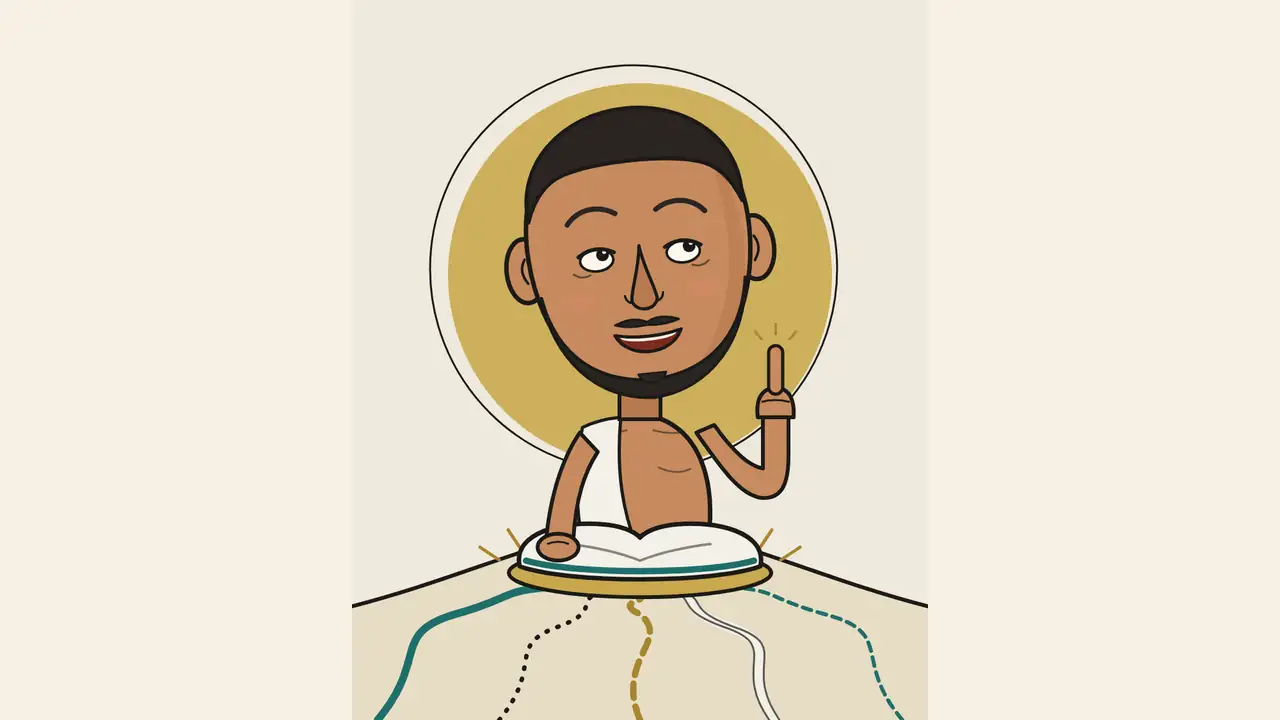
Original illustration drawn for WCRC. © Abhimanyu Ghosh & WCRC.
Spirituality · The Renaissance Masters · No. 15 of 27
Ramakrishna Paramahamsa walked other people's paths before he would praise them
A Kali temple priest at Dakshineswar practised Tantra, Advaita, Islam and Christianity in turn, then summed it up in four Bengali words. For leaders who must hold diverse teams to one goal, his method matters more than his tolerance.
WCRC Consulting · Strategy into execution
Implement these strategies inside your organisation
Deep analysis of where your organisation stands and a strategic implementation of The WCRC Many-Paths Model, built for your leadership team, culture and business.
Models created exclusively by Abhimanyu Ghosh; proprietary to Abhimanyu Ghosh and WCRC. WCRC's consulting service is not connected with, or endorsed by, any teacher, tradition or organisation discussed here.
Dates
1836 – 1886
Region
Dakshineswar, Kolkata, West Bengal
Tradition
Bhakti
WCRC model
WCRC-GLC-15
The model in one line
One clear summit; respect every path; walk another yourself.
The WCRC Many-Paths Model™ · anchored in Jato mat, tato path (As many faiths, so many paths)
A village boy, a Kali temple and a circle of disciples
Ramakrishna Paramahamsa was born Gadadhar Chattopadhyay on 18 February 1836 at Kamarpukur, in the Hooghly district of Bengal, to Kshudiram Chattopadhyay and Chandramani Devi. His birthday is still celebrated by the Hindu calendar, so the festival moves from year to year. Devotees recount that at about six, walking in the fields, he saw a flight of white cranes against a dark cloud and lost outer consciousness in joy.
At about sixteen he went to Calcutta to help his elder brother Ramkumar. In 1855 he became priest at the new Kali temple that Rani Rasmani had built at Dakshineswar. That temple, the Panchavati where he practised and his room there would be the centre of his life for three decades.
He wrote nothing. What survives of his teaching was recorded by devotees, above all by Mahendranath Gupta, known as "M", in the Bengali Sri Sri Ramakrishna Kathamrita, published in English as The Gospel of Sri Ramakrishna. Sri Sarada Devi, his wife, was also his spiritual companion. In November 1881 he met a young man named Narendranath Datta, who would become Swami Vivekananda.
In December 1885, during his final illness, he moved to a garden house at Cossipore. Devotees recount that on 1 January 1886, though ill, he walked in the garden and blessed everyone present; the day is kept as Kalpataru Day. He died at Cossipore on 16 August 1886. Belur Math, headquarters of the Ramakrishna Order, now holds a temple in his name.
One summit, many sincere routes
Ramakrishna's best-known teaching is short enough to fit on a temple wall, and Belur Math gives it in its original Bengali.
Jato mat, tato path. (As many faiths, so many paths.)
Sri Ramakrishna, Bengali saying (19th c.), as given by Belur Math; English rendering prepared for this series
Read quickly, it sounds like polite tolerance. Read alongside the rest of his teaching, it is a more demanding claim. He held, as the Gospel's introduction records, that God can be seen and known directly, through longing and devotion. The goal was never vague. What he refused to accept was that only one route led to it.
That pairing, a fixed summit with many legitimate paths, is the part leaders tend to miss. Organisations that celebrate diversity often lose sight of the goal, and organisations obsessed with the goal often insist on one house method for reaching it. Ramakrishna kept both. He worshipped Kali as the Divine Mother, the living power behind the world, with total devotion, and he still held that sincere seekers of other faiths were climbing the same mountain.
A third teaching gives the first two their ethical weight. Belur Math records his ideal of serving creatures as manifestations of God, Shiva-jnane jiva seva, the idea that inspired Vivekananda's service work. Respect for every path rested, for Ramakrishna, on respect for every person walking it.
The priest who kept becoming a student
The most unusual fact about Ramakrishna is how he arrived at his teaching. He arrived at it by walking the paths himself, one after another, over roughly fifteen years:
- From 1861, Tantra sadhana under the Bhairavi Brahmani.
- From late 1864, Advaita Vedanta under the monk Totapuri, who also gave him sannyasa.
- From the mid-1860s into the 1870s, Islamic and Christian practice, each taken up in turn.
The Totapuri episode is the one devotees tell most vividly. They recount that when Ramakrishna could not go beyond the form of Kali in meditation, Totapuri pressed a sliver of glass between his brows, and that he then entered nirvikalpa samadhi and remained absorbed for three days. A temple priest of great devotion accepted instruction from a teacher whose philosophy asked him to go past the form he loved.
After Islam and Christianity he reported reaching the same realisation through each. That report is what gives "as many faiths, so many paths" its authority. It came from a man who had walked the paths in person, from the inside, under the discipline of each.
For a leader the lesson sits in the method more than in the conclusion. Plenty of executives say they respect other functions, other cultures and other generations. Far fewer have done the work of those groups even for a week.
Different methods, some of them machines
A senior leader today may run teams in several countries, across four generations, and alongside a growing set of AI tools, each with its own way of reaching an answer. The pressure in that setting is to standardise: one method, one dashboard, one way of working. Ramakrishna's teaching argues for holding the goal steady and letting the routes vary.
The trust problem is real. Edelman's 2026 Trust Barometer, which surveyed 33,938 respondents in 28 countries, reports that "seventy percent are unwilling or hesitant to trust someone who has different values, facts, problem-solving approaches, or cultural background." The same study finds employers best positioned to broker trust across those divides.
Research also suggests why the effort pays. In a computational model, Hong and Page showed in 2004 that under certain conditions a team of randomly selected, diverse problem solvers outperforms a team of the best-performing individuals, because the best performers tend to be similar to one another. Scott Page developed the argument in The Difference, published in 2007.
The AI angle is specific. When different tools, and the people who build and use them, reach the same goal by different routes, a leader who has worked with several of them can combine their strengths. One who knows only the house method will referee between them without understanding any. Ramakrishna's practice of walking another path is the best cure for that.
The WCRC Many-Paths Model
Created by Abhimanyu Ghosh · A proprietary model of Abhimanyu Ghosh and WCRC
WCRC calls this the Many-Paths Model. The diagram above shows several routes, different functions, cultures, methods and generations, converging on one shared summit. The building blocks below set out what that requires: one clear summit, many legitimate paths, a leader who walks another path personally, service to every person on every route and joy in the climb. It is a model for integration, and it scores highest on people leadership and global mindset.
The Many-Paths Model holds the goal fixed and treats the routes to it as many and legitimate. The leader learns other paths by walking them in person, which turns tolerance into understanding and makes the leader a trusted integrator of different functions, cultures and methods.
Fig. 1The WCRC Many-Paths Model™
© Abhimanyu Ghosh & WCRC
The building blocks
01One clear summit
The goal is fixed and shared, so variety in method does not become confusion about purpose.
In practiceState the organisation's goal in one sentence that every function and region can repeat.
02Many legitimate paths
Different teams, cultures and methods can reach the same goal; no single route has a monopoly on truth.
In practiceLet regions and functions choose their own methods once they commit to the shared outcome.
03Walk the other path yourself
Real understanding of another view comes from practising it, which earns the trust of the people who hold it.
In practiceThe leader spends real working time inside another function or market each year, doing the work.
04Serve beings as the DivineShiva-jnane jiva seva
Respect for every path rests on respect for every person on it.
In practiceTreat the people on the least favoured path in the company with the same care as those on the dominant one.
05Joy in the climb
Diversity of route is a source of delight and learning, not a problem to be managed away.
In practiceCelebrate cases where a different method reached the shared goal better than the standard one.
A CEO who has worked the other side of the house
The first demand on a CEO is clarity about the summit. If the goal of the organisation cannot be stated in one sentence that every function and region can repeat, freedom of method becomes drift. Ramakrishna's tolerance rested on a goal he never doubted. Without that, many paths is simply many directions.
The second demand is personal. The model asks the leader to spend real working time each year inside another function or market, doing the work. The difference between visiting and working is the whole point. A CEO who has spent a week answering customer complaints, or shipping code, or running a regional sales territory, carries an understanding that no briefing gives.
Murphy's 2012 paper in Human Resource Management describes reverse mentoring, in which a younger, junior employee mentors an older, senior colleague. It is the generational version of walking another path, and it costs little more than humility.
The service teaching, Shiva-jnane jiva seva, has a direct reading in a CEO's diary. Look at whose meetings you accept and whose you delegate. In many companies the dominant path, often the function the CEO came from, gets far more of the leader's time than the others. Serving every person on every path starts with noticing that imbalance and correcting it, week by week.
The blind spot is the opposite of rigidity. Respect for difference can be used to avoid hard calls when one path is plainly failing the shared goal. Ramakrishna's teaching honoured sincere paths. It never required pretending that every method works equally well for a particular business purpose.
Founders, one sentence and many small teams
Founders usually have the summit clearly in mind and struggle to let others choose the route. The early habit of deciding everything personally becomes, at twenty or thirty people, a bottleneck. The model offers a trade. Write the goal down in one sentence, share it, and then let each small team pick its own way there.
A founder can also walk other paths cheaply. Spend a few days a year actually doing sales, support and engineering. Most founders come from one of those paths and treat the others as service functions. A day on the support queue changes that.
The model's fifth building block, joy in the climb, is the easiest to forget under pressure. When a team reaches a target by an unexpected route, celebrate the route as well as the result, and say what the rest of the company can learn from it. Ramakrishna's own story begins with delight, a boy lost in joy at the sight of white cranes against a dark cloud, and the teacher he became kept taking up new paths for years. Founders who treat every departure from their method as a threat will build companies that never discover a better one.
Watch for tourism. A morning on the shop floor with a photographer counts for nothing here. The test is whether you produced something real while you were there.
Mergers, regions and the methods register
Large companies feel the Many-Paths problem most sharply after acquisitions and in international expansion. The acquiring company's method is usually imposed, and the people who built the acquired business, often by a different route to the same kind of customer value, leave. The model offers a different default: hold the shared goal and outcome measures fixed, and approve local methods that meet them.
That approval needs a record. A register of approved team methods that differ from the house standard yet meet the shared outcome measures turns tolerance into something auditable. It also lets the company learn, because a method that works better in one region can be offered to others.
Boards can ask for one telling number: the gap between the highest and lowest trust-in-leadership scores across functions, regions and age bands. If one group trusts the leadership far less than others, a path is being treated as second-class. Ramakrishna's service teaching asks that the people on the least favoured path get the same care as those on the dominant one.
The final risk is the one named first among the failure modes: many paths with no summit. Each year, the board should check that the shared goal is still sharp enough to hold the variety together. A summit that has blurred can no longer hold any path to account, and the variety it once organised turns into noise.
The business model
The operating model below starts with a clearly stated shared goal, teams with different methods and cultures, leaders willing to work in other functions and respect for every person and route. Its practices are freedom of method under a common outcome, leaders rotating through other paths, cross-path reviews of what worked and reverse mentoring across generations. The outputs are fewer turf wars, leaders trusted by many groups, a wider set of tested solutions and faster integration after mergers or expansion. Over time, the company builds a global mindset in its leadership and a cohesive culture that does not depend on uniformity.
Fig. 2Operating model: running the WCRC Many-Paths Model
© Abhimanyu Ghosh & WCRC
Inputs
What the company commits
- One clearly stated shared goal
- Teams with different methods and cultures
- Leaders willing to work in other functions
- Respect for every person and route
Practices
What leaders do, repeatedly
- Freedom of method under a common outcome
- Leaders rotating through other paths
- Cross-path reviews of what worked
- Reverse mentoring across generations
Outputs
What changes in the work
- Fewer turf wars between functions
- Leaders trusted by many groups
- Wider set of tested solutions
- Faster integration after mergers or expansion
Outcomes
What the enterprise gains
- Strong global mindset in leadership
- Higher trust across divides
- Better problem-solving from diverse views
- Cohesive culture without uniformity
The benefit model
The leader gains credibility as an integrator, because rival views are understood from the inside. Employees can reach the goal in ways that suit their craft and culture without being judged for departing from one house method. Customers in different markets are served in ways that fit them, and investors see a company that keeps a single strategic goal while adapting its methods, which lowers execution risk. Society gains a business that models harmony across faiths, cultures and generations.
Fig. 3Benefit model: who gains what
© Abhimanyu Ghosh & WCRC
The leader
Having walked other paths, the leader can integrate rival views with credibility instead of refereeing between them.
Employees
They can reach the goal in ways that suit their craft and culture without being judged for not following one house method.
Customers
In different markets they are served in ways that fit them, because local paths are treated as legitimate.
Investors
The company keeps a single strategic goal while adapting methods, which lowers execution risk across markets.
Society
A business that respects many paths models harmony across faiths, cultures and generations in a divided time.
Fig. 4Where the model moves the needle
© Abhimanyu Ghosh & WCRC
- Vision Quotient
- ●●●●●
- Impact Index
- ●●●●●
- Innovation Score
- ●●●●●
- People Leadership
- ●●●●●
- Stakeholder Trust
- ●●●●●
- Resilience Factor
- ●●●●●
- Global Mindset
- ●●●●●
How to implement the WCRC Many-Paths Model
Your first move
Write the organisation's goal in one sentence that every function and region can repeat, and send it to your leadership team for challenge this week.
If you are the founder or CEO
- 1
State the summit in one sentence
In the first week, write the shared goal in one plain sentence and test it with people from different functions until all can repeat it. Hold it fixed from then on.
- 2
Free the methods
Tell each function or region that it may choose its own route once it commits to the shared outcome measures. Intervene only when a route is plainly failing the goal.
- 3
Walk another path yourself
Spend real working time each year doing the work inside another function, market or generation, not visiting it. A founder can rotate through roles for a few days; a large-company CEO takes a longer stint in a unit far from their own background.
- 4
Take a reverse mentor
Pair with a junior colleague from a different background and meet every month to learn how they see the work. Act on at least some of what you hear.
- 5
Celebrate a different route
Each quarter, publicly recognise a case where a non-standard method reached the shared goal better than the house way. Treat people on less favoured paths with the same care as the dominant group.
Rolling it out across the company
| Step | Owner | What the company puts in place |
|---|---|---|
| 01Map paths and trust gaps | CEO office with CHRO | Record which methods each function and region uses, where turf wars occur, and how trust in leadership differs by function, region and age band. This is the baseline for trust across groups. |
| 02Pilot freedom of method | Two business heads with a shared goal | Let two units with the same outcome measures use different methods for a set period, and run a joint review of what worked. Have their leaders spend time working in each other's units. |
| 03Embed cross-path rotation | CHRO | Make time working inside another function or market a requirement for senior promotion, and set up reverse-mentoring pairs for every senior leader. Approve team methods that differ from the house standard when they meet the shared outcome. |
| 04Train managers as integrators | CHRO and all people managers | Teach managers to hold the shared goal while respecting different routes, and to make the hard call when a path is failing. Use real cross-function disputes as practice cases. |
| 05Track exposure and trust spread | HR analytics | Report cross-path exposure days, method diversity under one goal, the gap in trust between groups and reverse-mentoring participation every quarter. Look for the trust gap narrowing over time. |
| 06Scale and guard the summit | CEO and board | Extend freedom of method and rotations across the company once the pilot shows fewer turf wars, and check each year that variety has not cost the organisation its direction. Stop paths that fail the shared goal rather than tolerating them. |
The execution roadmap
Four phases, each closed by a gate. Do not move on until the gate is met.
Days 0–30
Phase 1 · Diagnose and commit
Fix the one clear summit and map the paths and trust gaps that exist today.
- Write the organisation's goal in one sentence and test it with every function and region until each can repeat it.
- Map the methods teams actually use to reach that goal, including the ones head office does not favour.
- Break the trust-in-leadership score down by function, region and age band and record the gap between highest and lowest.
- Record how many days each senior leader spent working inside another function or market last year.
Deliverable
The one-sentence summit and a path map showing methods, trust gaps and cross-path exposure.
Gate to proceed
Every function and region can repeat the summit sentence, and a baseline is recorded for every KPI.
Days 31–90
Phase 2 · Pilot and prove
Prove that different routes to a shared goal work when leaders walk each other's paths.
- Two business heads with the same goal each choose their own method and commit to the same outcome measures.
- Each head spends real working time inside the other's function, doing the work rather than visiting it.
- Start reverse-mentoring pairs between each pilot head and a junior colleague from a different group.
- Celebrate in public any case where the less favoured method reached the goal better than the standard one.
Deliverable
A pilot comparison of both methods against the shared outcome measures, with a keep, adapt or stop decision for each.
Gate to proceed
Both pilot methods are measured on the same outcomes, both heads have completed working time in the other's area, and a decision is recorded for each method.
Days 91–180
Phase 3 · Embed and scale
Make freedom of method and walking other paths normal for every senior leader.
- Set up a rotation so every senior leader spends working days each year inside another function, market or generation's work, with a real output.
- Create a register of approved methods that differ from the house standard but meet the shared outcome measures.
- Extend reverse mentoring to every senior leader.
- Train managers as integrators who can hold teams with different methods to one goal, and treat people on the least favoured path with equal care.
Deliverable
A cross-path rotation programme, a methods register and a trained group of integrator managers.
Gate to proceed
Rotation is scheduled for every senior leader, and the methods register is in use for approving new team methods.
Month 7 onwards
Phase 4 · Sustain and renew
Guard the summit so tolerance of many paths never becomes lack of direction.
- Review every method in the register once a year against the shared outcome measures.
- Stop methods that have failed the shared goal across agreed review points, and say why in public.
- Re-test the summit sentence when strategy changes, keeping it to one sentence.
- Track the spread of trust across groups and act on the lowest-scoring group first.
Deliverable
An annual paths review covering exposure, method diversity, trust spread and reverse-mentoring participation.
Gate to proceed
The trust gap between the highest and lowest groups is narrowing or holding, and every registered method has been reviewed against the goal in the year.
Governance
- Sponsor
- The CEO, because only the CEO can fix the summit and grant freedom of route to the units below.
- Lead
- The COO, who sits across functions and regions and runs the methods register and the rotation.
- Review forum
- Quarterly in the leadership meeting, with an annual paths review for the board.
- Decision rights
- The lead can approve new methods that commit to the shared outcome measures and schedule rotations; changing the summit or stopping a region's method goes to the sponsor.
Operating rhythm
- MonthlyReverse-mentoring pairs meet, and senior leaders bring back one thing they learned from the other path.
- QuarterlyMethods review: each approved method is checked against the shared outcome measures.
- QuarterlyOne case where a different route reached the goal well is told to the whole company.
- AnnuallyEach senior leader completes a working stint inside another function or market, with an output the host team signs off.
- AnnuallyThe summit sentence is re-tested with every function and region.
Implementation risks and how to handle them
| Risk | Early warning | Mitigation |
|---|---|---|
| Walking other paths turns into tourism, with short visits and photographs. | Rotation days are logged but no host team can name an output. | Require each stint to produce a real piece of work signed off by the host team. |
| The dominant path quietly reasserts itself and head office overrides local methods. | The methods register shrinks and regional teams stop proposing alternatives. | Require evidence against the shared outcome measures before any method can be overruled. |
| Respect for difference is used to avoid stopping a method that is plainly failing. | A method misses the shared outcome at successive reviews and is still running. | Agree a stop rule for each method when it is approved, and apply it. |
| The summit sentence lands differently across languages and regions. | Regions paraphrase the goal in ways that change its meaning. | Translate and test the sentence with local teams, keeping the meaning fixed while the words fit the language. |
By stage of company
Startup
Founder-led, under ~50 people
The founder states the goal in one sentence and lets each small team pick its own way there. The founder works a few days in sales, support and engineering each year to understand each path.
Scale-up
~50 to 1,000 people
A methods register records which team approaches are approved, and senior leaders rotate into other functions with a real output. Reverse mentoring starts for the leadership team.
Enterprise
Large or listed company
Regions and functions choose their methods within one shared goal, the COO runs the register and rotation, and trust is tracked across groups. The board receives an annual paths review and checks that the summit has not blurred.
Are you ready?
- Can every function and region state our shared goal in the same words?
- Have our senior leaders done real work inside a function or market other than their own?
- Are we willing to stop a method that is plainly failing the goal, even when we respect the people using it?
What success looks like at 12 months
- Any employee, in any function or region, can state the organisation's goal in the same sentence.
- Senior leaders can describe the work of another function from having done it.
- Teams using different methods respect each other, and the gap in trust between groups has narrowed.
Habits to start this quarter
- 1
Write the summit, then test it
Write your organisation's goal in one sentence and read it aloud to three people in different functions. Ask each what it means for their work. If the answers point in different directions, rewrite it.
- 2
Book a working week elsewhere
Before the quarter ends, book five working days in a function or market you have never worked in, with a real piece of output agreed in advance.
- 3
Ask a junior colleague to teach you
Choose one tool or habit that younger colleagues use and you do not. Ask one of them to teach you over four short sessions, and do the homework.
- 4
Lunch with the least favoured path
Once this quarter, share a meal with a team whose work is usually treated as secondary in your company. Ask what they wish leadership understood about how they reach the goal, and listen without correcting.
- 5
Collect a different route
Find one case this quarter where a team reached a shared target by a method other than the standard one. Write it up in half a page and send it to your leadership team.
What to measure
| Leading indicator | How to measure it |
|---|---|
| Cross-path exposure | Track the number of days each senior leader spends working inside another function, market or generation's work each year. |
| Method diversity under one goal | Count approved team methods that differ from the house standard yet meet the shared outcome measures. |
| Trust across groups | Break the employee trust-in-leadership score down by function, region and age band and track the gap between highest and lowest. |
| Reverse mentoring participation | Record the share of senior leaders in an active reverse-mentoring pair with a junior colleague. |
Where the model goes wrong
- Many paths with no summit: tolerance of every method becomes a lack of direction.
- Walking other paths becomes tourism, a short visit for photographs rather than real work.
- Respect for difference is used to avoid hard calls when one path is plainly failing the shared goal.
The summit stays where it is
WCRC's view is that the Many-Paths Model answers one of the hardest questions in modern leadership: how to hold a varied organisation together without flattening it. Ramakrishna's answer was to be unbending about the goal and generous about the route, and to earn that generosity by walking the routes himself.
Most leaders already say they respect other paths. Ramakrishna practised them. The summit stays where it is; the leader's job is to know more than one way up.
Powerfacts
- What did Ramakrishna Paramahamsa teach about other religions?
- Ramakrishna Paramahamsa, the 19th-century saint of Dakshineswar near Kolkata, taught "Jato mat, tato path", as many faiths, so many paths. He practised Tantra, Advaita Vedanta, Islam and Christianity himself and reported reaching the same realisation through each. Belur Math gives the saying as central to his teaching.
- What is the WCRC Many-Paths Model?
- It is WCRC's model for leading diverse organisations toward one goal. The goal is held fixed while routes to it are treated as many and legitimate, and the leader learns other paths by working inside them. This makes the leader a trusted integrator across functions, cultures and methods.
- Why does the Many-Paths Model matter now?
- Edelman's 2026 Trust Barometer reports that seventy percent of respondents are unwilling or hesitant to trust someone with different values, facts, problem-solving approaches or cultural background. It also finds employers best placed to broker trust across divides. Leaders who have walked other paths are better equipped to do that.
Sources
- Sri Ramakrishna, Belur Math (Ramakrishna Math and Ramakrishna Mission)
- Ramakrishna, Encyclopaedia Britannica
- The Gospel of Sri Ramakrishna, Introduction: Marriage and After, ramakrishnavivekananda.info
- The Gospel of Sri Ramakrishna, Introduction: Totapuri, ramakrishnavivekananda.info
- The Gospel of Sri Ramakrishna, Introduction: Last Days at Cossipore, ramakrishnavivekananda.info
- 2026 Edelman Trust Barometer: Trust Amid Insularity, Edelman
- Groups of diverse problem solvers can outperform groups of high-ability problem solvers (Hong and Page, 2004), Proceedings of the National Academy of Sciences
- The Difference (Page, 2007), Princeton University Press
- Reverse mentoring at work (Murphy, 2012), Human Resource Management
Read Sri Ramakrishna Paramahamsa's life and teachings on Gurushakti.
The WCRC Many-Paths Model™ (WCRC-GLC-15) is part of The WCRC Guru Leadership Codex™. Created exclusively by Abhimanyu Ghosh; a proprietary model of Abhimanyu Ghosh and WCRC. © 2026 Abhimanyu Ghosh and World Centre for Research and Consulting. All rights reserved.